Hourly Aggregation Approaches and Uncertainties🔗
Week Seventeen CalTRACK Update
Establishing guidelines for aggregating building-level hourly energy savings into portfolio load shapes requires careful consideration of information and uncertainty-level preferences for various use cases. The issues with aggregating energy savings for hourly methods and potential solutions are outlined below:
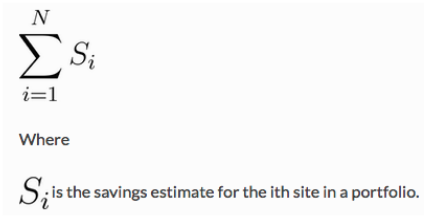
Aggregation Method for Billing Period and Daily Methods: In daily and billing period methods, building-level savings are generated by summing the building’s estimated energy savings for each day or billing period of the reporting period. The portfolio savings are then calculated by aggregating total savings for each building in the portfolio.
Why are daily and billing period aggregation methods problematic with hourly models? For hourly models, portfolio uncertainty is difficult to calculate when savings are aggregated for each hour due to correlation in the error term.
Suggested Hourly Aggregation Methods: To begin our discussion of hourly aggregation methods, consider two types of roll-ups:
Vertical Roll-Ups: In a vertical roll-up, hours within a day are grouped together for each building before aggregation. For example, one may choose to aggregate hourly energy savings in three-hour intervals throughout the day instead of each hour individually. Although vertical roll-ups can reduce portfolio uncertainty, larger time intervals provide less information in portfolio load shapes. Hourly methods are created to provide granular information about energy load impacts during each time-of-day. Less information is available if hours are “rolled-up” into larger time intervals.
Horizontal Roll-Ups: Horizontal roll-ups aggregate each hourly estimate with estimates of the same hour across weeks. A horizontal roll-up can aggregate individual hours or time intervals, such as the three-hour interval discussed above.
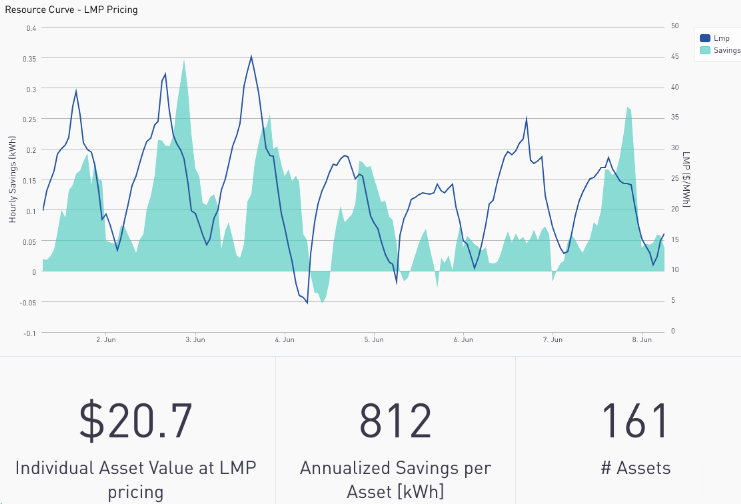
Other Considerations: There were a few additional suggestions from the working meeting (5/24) that could help create guidelines for aggregating portfolio load shapes:
- Take 8760 (full year hourly load) building data and establish criteria for “slicing and dicing” the data to identify patterns that can inform hourly aggregation guidelines.
- Leveraging measure-specific load shapes, from existing technical reference manuals or deemed savings models, was yet another idea that was brought to the table.
In the coming weeks, we welcome proposals and testing criteria to determine appropriate guidelines for utilizing the vertical and horizontal roll-ups to aggregate hourly savings into load shapes.
Homework:
- Provide proposals and testing criteria for aggregating portfolio load shapes on GitHub (issue 97)
- Attend standing meeting on 6/7 at 12:00 PM (PST)
- Contribute to the Sand Box of future issues